ProActive Running - Injury Prevention & Recovery for Runners: Small Habits, Big Results
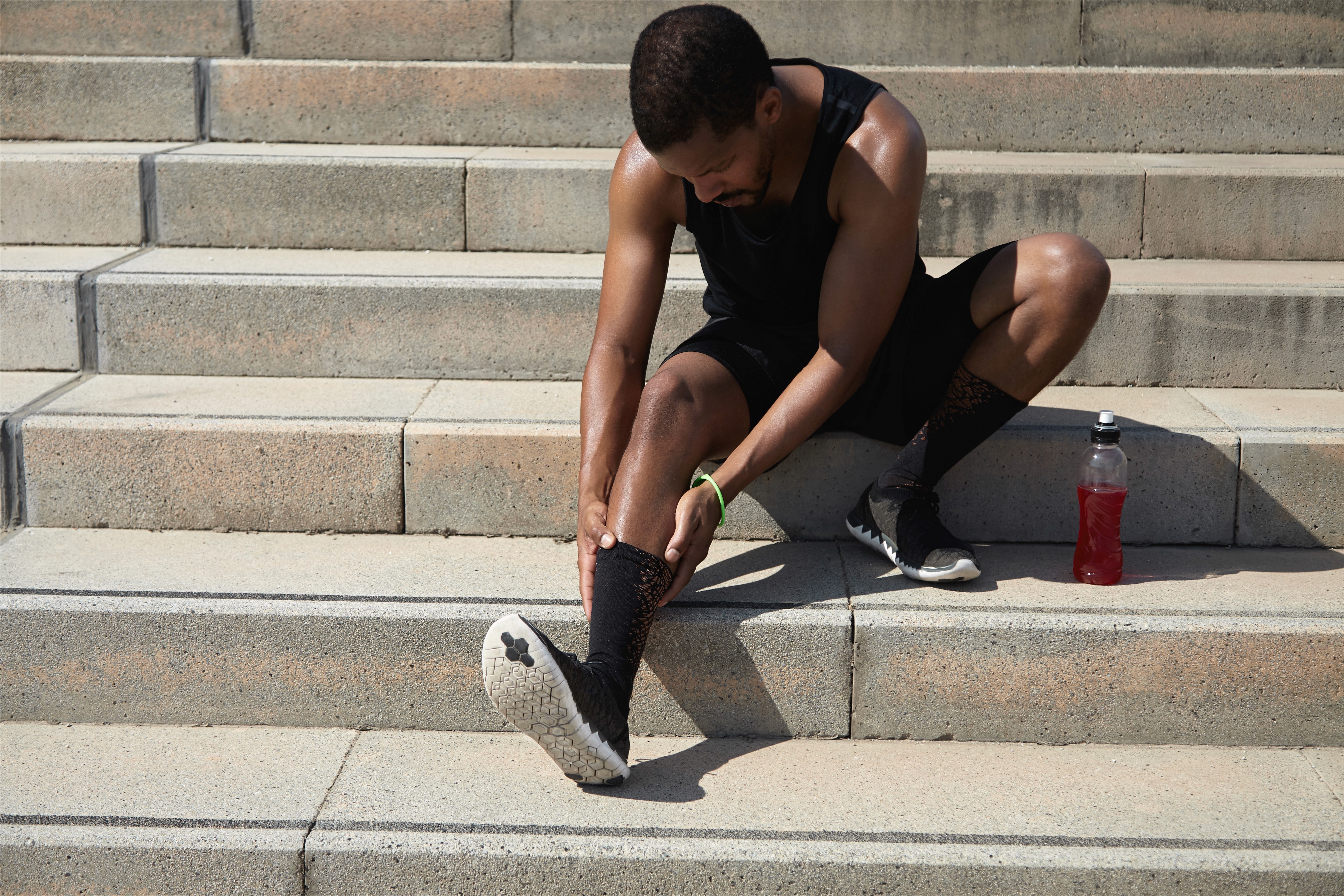
One thing that is essential to getting active is to prevent injuries. Edouard mentions it as a core habit to take when running to stay injury-free. Two modest but consistent habits, targeted muscle strengthening and regular stretching, can dramatically reduce your risk of getting sidelined.
Why Runners Get Hurt
Running is a high-repetition sport. Each stride sends a force of roughly 2–3 times your body weight through your lower limbs, thousands of times per outing. Research confirms that a multifactorial approach considering individual risk profiles is key for injury prevention, but among all the levers available, strength and mobility stand out as the most controllable by any recreational runner. (Source Running-Centred Injury Prevention Support)
Pillar 1: Strengthen the Muscles Around Your Joints
The Science Behind It
A landmark study published in the British Journal of Sports Medicine (Leppänen et al., 2024) divided novice runners into three groups: hip and core strengthening, foot and ankle strengthening, and a control group doing static stretching. The results were striking: (Source The Runners Academy)
The hip and core group had 39% fewer injuries overall
They had 52% fewer "substantial" injuries, those that disrupted training or required medical intervention
The foot and ankle group showed no statistically significant improvement over the control group
This doesn't mean ankle work is useless, it means hip and core strength is foundational and often the most neglected area.
The Exercises That Matter
You don't need a gym membership or hours a week. The following moves, done consistently 2–3 times per week, build the resilience your joints need:
For the knees and hips:
Squats: strengthen glutes, quads, hamstrings, and hip abductors, directly protecting the patellofemoral joint. Aim for 10–30 reps, holding 5 seconds at the bottom.(Source Runner’s Knee: 10 exercises to help prevent and treat it)
Single-leg squat (pistol squat variation): strong glutes prevent the inward knee collapse (valgus stress) that causes runner's knee. Start with a slow 3-second descent. (Source: Injury Prevention for Runners Through Strength Training)
Lateral band walks: loop a resistance band around your ankles and take 15 steps sideways in each direction; this reinforces the hip abductors that stabilize every stride.(Source The best knee-strengthening exercises for runners)
Split squat / Bulgarian squat: challenges stability and hip joint range of motion beyond what running itself provides. (Source The best knee-strengthening exercises for runners)
For the ankles and calves:
Single-leg calf raises off a step: strengthen the calf-Achilles complex, reduce risk of tendinopathy, shin splints, and ankle sprains. Progress from bodyweight to a 5–20 kg weighted pack. (Source Run Smart, Stay Strong)
Reverse lunge to knee drive: builds ankle stability, quad and glute strength simultaneously. (Source Ankle-Strengthening Exercises for Runners)
🎥 Watch it in action: Mathieu Blanchard, elite Decathlon trail runner (former Salomon trail runner) and Western States finisher, demonstrates a strength routine targeting the exact muscles used in climbing and descending — a perfect complement to road and trail runners alike. Watch his Campus Coach strength routine on YouTube. Nicolas Spiess (RunningAddict), who built one of France's leading running platforms with 75,000 active monthly users, also covers progressive strength work through his Campus Coach (Video YouTube)
Pillar 2: Stretch Smarter, Not Longer
Dynamic Before, Static After
Timing matters more than duration. Research published in the Journal of Strength and Conditioning Research found that dynamic stretching before a run improves muscle activation and running economy: while static stretching before a run can reduce muscle force output by up to 9% for up to 60 minutes. (Source Static vs. Dynamic Stretching)
The practical rule:
Pre-run → dynamic stretching (leg swings, hip circles, high knees, walking lunges)
Post-run → static stretching (hold 15–30 seconds per position, 2–3 repetitions)
What About Soreness (DOMS)?
Delayed onset muscle soreness (DOMS) typically peaks 24–48 hours after a hard effort. Research shows that DOMS can impair range of motion, alter your running mechanics, and increase injury risk if training resumes too soon. A systematic review in PubMed noted that while post-exercise static stretching alone doesn't dramatically reduce DOMS, it improves short-term range of motion recovery, and combined with low-intensity movement, it signals the body to begin repairing. (Source The Effectiveness of Post-exercise Stretching in Short-Term and Delayed Recovery of Strength, Range of Motion and Delayed Onset Muscle Soreness)
Foam rolling (20 minutes immediately post-run and every 24 hours after) has shown measurable reductions in muscle tenderness and performance decrements from DOMS. (Source Foam Rolling for Delayed-Onset Muscle Soreness and Recovery of Dynamic Performance Measures)
The Essential Post-Run Stretch Routine
Just 5–8 minutes is enough to make a meaningful difference the next day. Hit these key areas: (Source A runner’s stretch routine to aid recovery)
Calf / Achilles stretch: hands on wall, heel pressed into floor, hold 15–30 sec × 3
Calf-plantar fascia stretch: seated, towel looped under toes, pull toward you
Low lunge (hip flexor stretch): sink hips toward floor, hold 15 sec per side
Lying glute / piriformis stretch: ankle over opposite knee, pull both legs to chest, hold 30 sec
Quad stretch: standing, heel to glute, 30 sec per leg
🎥 RunWise, a data-driven running platform, reinforces that injury prevention isn't just about reacting to pain: it's about predictive, proactive habits built into every week. Their content consistently highlights how small stabilizer muscles (precisely the ones targeted by squats and calf raises) are what most runners overlook until it's too late. (Source YouTube)
The Minimum Effective Dose
The good news: you don't need to spend hours on this. Here's a realistic weekly framework:
Day | What to do |
Run days | 5-min dynamic warm-up + 5–8 min static cool-down stretch |
2–3x/week | 15–20 min strength circuit (squats, single-leg calf raises, lateral bands) |
Day after a long run | Foam roll + gentle stretching, prioritize sleep and hydration |
The science is clear: a consistent, low-commitment routine beats an intensive but sporadic one. As Mathieu Blanchard puts it, being serious about strength training is the key to progressing in trail running: on climbs, descents, and flat ground alike. (Source YouTube)
The Bottom Line
Injury prevention is not reserved for elite athletes with coaching teams and physio budgets. Two pillars: targeted strengthening (especially hips, glutes, and calves) and timed stretching (dynamic before, static after): are accessible to every runner, require minimal equipment, and are backed by solid science. Start with 15 minutes twice a week, and your future self will still be running when others are on the sidelines.
Sources include: British Journal of Sports Medicine (Leppänen et al., 2024), PubMed systematic review on post-exercise stretching (2021), JSSM on DOMS and foam rolling (2026), Princeton Medicine on dynamic vs. static stretching, and content from RunWise, Nicolas Spiess / RunningAddict, and Mathieu Blanchard / Campus Coach.
This is the fourth practical posts from Les Endurants. Each one comes directly from a real conversation on a real run.
Have recommendations in terms of strength training, stretching or general injury prevention? What worked for you? Tell us more.
Ready to run with us? Register for the next run on Luma · Follow the club on Strava · Subscribe to the Les Endurants newsletter · Questions? Write to us at LesEndurantsBlog@proactionentrepreneur.com
Les Endurants is a weekly running community for entrepreneurs, intrapreneurs, and anyone who wants to move and build real connections. An initiative of ProAction Entrepreneur, led by Edouard Ferron-Mallett.
Community Events
Quick Links
Contact
+(514) 476-1088
getsupport@proactionentrepreneur.com
Montreal, QC Canada
© 2026 ProAction Entrepreneur. all rights reserved